Learning the Gaiwan: Three Months of Fumbling
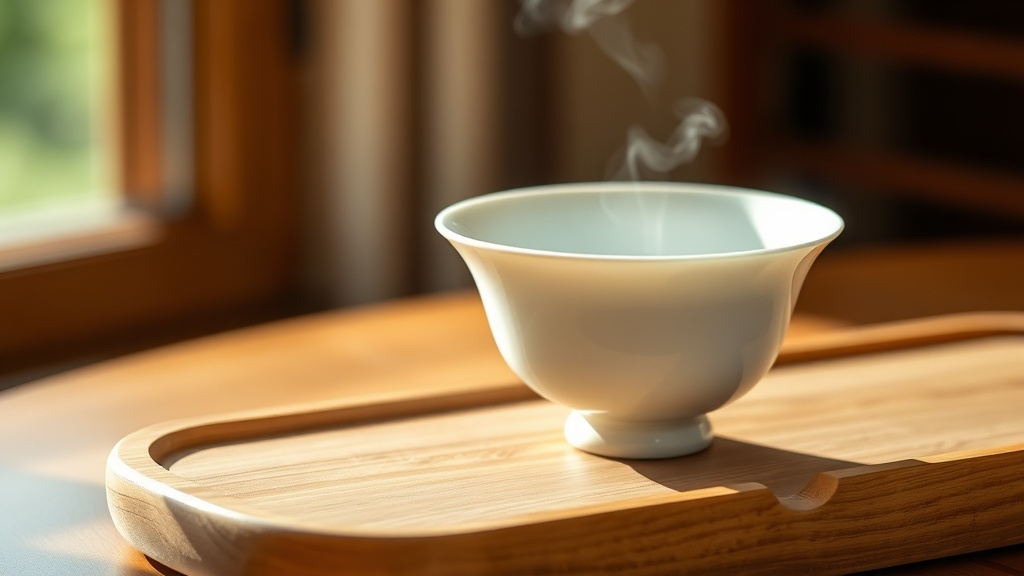
The first time I tried to pour from a gaiwan I spilled hot tea across my left hand and the entire kitchen counter. The second time I used oven mitts, which works but misses the point. The third time I finally slowed down enough to hold it correctly, and it was fine.
That's the gaiwan experience. It punishes rushing. Once you make peace with that, it's a remarkably effective brewing vessel.
What a gaiwan actually is
Three pieces: a bowl (wan), a lid (gai), and a saucer. That's it. The lid serves as a strainer when you tip the whole thing to pour. There's no spout, no handle, nothing to filter for you — just your grip and your angle.
It originated in China during the Ming dynasty as a personal tea drinking vessel — not a brewing pot that pours into cups, but a single bowl you drink from directly. The lid pushes floating leaves aside when you sip. At some point the brewing-into-cups use took over, at least in the West, and that's how most people encounter it today.
Size varies a lot. My first one was 150 ml, which I'd now call too large for serious brewing. The one I use most is a 100 ml porcelain gaiwan from a shop in Rotterdam's Chinatown district — plain white, nothing special, bought for about €6. It works fine.
The grip problem
This is where most people give up, so I'll be specific.
The conventional grip: thumb on the rim of the saucer, middle finger on the rim of the saucer on the opposite side, index finger resting lightly on top of the lid's knob. Your ring and little fingers curl under slightly. You're holding the saucer, not the bowl directly.
Why this burns you: when you tip the gaiwan to pour, the hot bowl rotates toward your thumb. If you're gripping too close to the bowl, or if your saucer is thin and conducts heat, it hurts.
What actually helped me: tipping the lid to create a small gap on the side away from where you pour, and pouring quickly rather than slowly. A slow pour keeps the bowl in contact with your hand longer. A fast pour gets it over with. Once I understood that, the burns stopped.
A 100 ml gaiwan at 90°C water cools to a comfortable temperature in about 45 seconds after the water goes in. That first pour — the one everyone burns themselves on — happens at peak heat. Let it sit for 3–5 seconds before tipping if you're still learning the grip.
Leaf ratio and infusion time
I use roughly 5–7 g of leaf per 100 ml. That's more than Western-style teapot ratios, because gong fu brewing is designed around many short infusions, not one long one.
Infusion times I actually use:
- First infusion: 20–30 seconds (for most oolongs; greens get 15)
- Second infusion: 25–35 seconds
- Third through sixth: add about 5–10 seconds per infusion
- After six infusions: add 20–30 seconds each
These aren't gospel. They're starting points. The leaf tells you when it's done — a good Taiwanese oolong at the right temperature will taste sweet and floral for six or seven rounds before it starts going thin and papery. When it goes thin, stop.
What teas suit it best
Oolongs are the obvious answer, and they're obvious because they're correct. Ball-rolled Taiwanese oolongs (High Mountain, Dong Ding, Alishan) do well in a gaiwan. So do strip-style Wuyi rock oolongs from Fujian — Da Hong Pao, Rou Gui, Shui Xian.
I also brew aged white teas in a gaiwan, specifically Fuding white teas that have been stored for a few years. They reward the multiple infusion approach — the early rounds are mild and hay-like, and by the fourth or fifth infusion something deeper comes through.
What I'd avoid in a gaiwan: Japanese greens. Not because it doesn't work, but because the short infusion times and high leaf ratios don't suit the way gyokuro or sencha extract. A kyusu does better there.
Which one to buy first
Plain white porcelain, 100–120 ml, with a wide saucer. Don't buy a tiny 75 ml one as your first — the ratio of lip area to volume makes the grip harder. Don't spend more than €15. The ceramic quality that matters for brewing (inert surface, even heat distribution) is present in cheap gaiwans from Chinese suppliers. The €60 ones with hand-painted designs are pleasant objects but not better brewing tools.
Once you're using it without burning yourself and you're tasting the difference between a 20-second and a 40-second first infusion, then buy something nicer if you want to.
Filed under all posts · Next: Water temperature →