Matcha in a Delft-Blue Bowl: An Unlikely Pairing
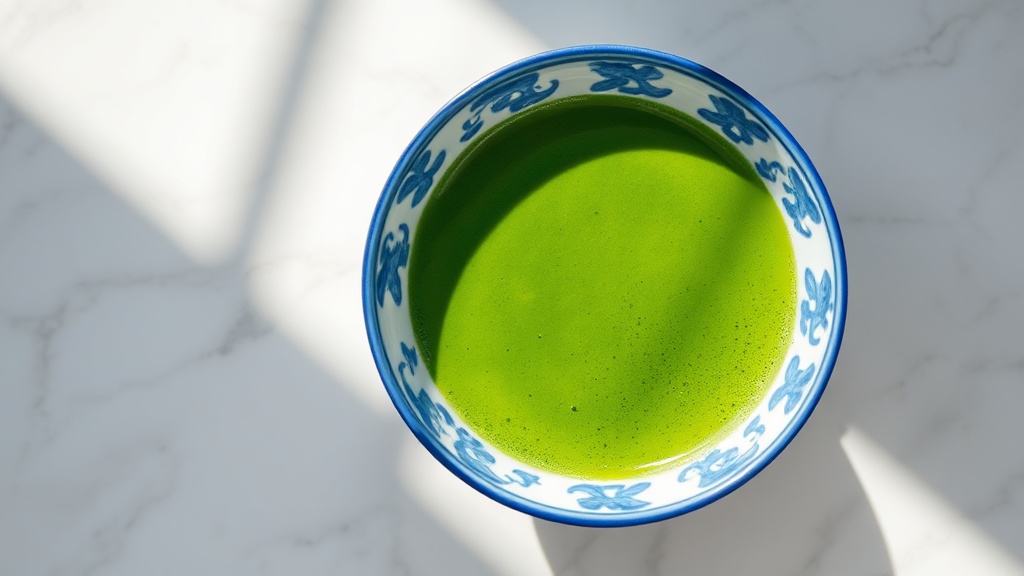
I found the bowl at a second-hand shop on the Hippolytusbuurt, one of the older streets in Delft's center. It's a wide, shallow rice bowl — white glaze with hand-painted blue windmills around the rim, the kind of thing that gets made by the thousand for the tourist market and ends up in estate sales. About 14 cm across, the right depth. I paid €2 for it.
I wasn't thinking about matcha when I bought it. I was thinking about soup. But when I got home and set it on the counter next to my chasen and tin of Uji matcha, the combination looked right in a way I didn't expect.
On using the wrong vessel
A proper matcha chawan — a Japanese tea bowl — is designed for the task. The shape supports the whisking motion. The clay body has specific thermal properties. The aesthetic is part of the experience. There are chawans that cost thousands of euros and are considered works of art in their own right.
A Dutch tourist bowl from a charity shop is not a chawan. But it turns out to be a reasonable substitute for informal preparation, and using it opened up something I hadn't thought about: the relationship between where an object comes from and what you do with it.
The Delft blue-and-white style was itself borrowed. When Dutch potters in the 17th century started producing blue-and-white earthenware, they were explicitly copying Chinese porcelain — the Ming Dynasty blue-and-white imports that were fashionable and expensive across Europe. Delft ware was a local answer to an imported aesthetic. So a Delft bowl has Japanese and Chinese ceramic traditions somewhere in its ancestry, just at several removes.
Putting matcha in it felt less incongruous once I thought about it that way.
How it actually performs
The earthenware body holds heat worse than porcelain. For matcha, which you're drinking immediately rather than brewing through multiple infusions, that matters less than it would for other preparations. I warm the bowl first with hot water, dry it, then whisk. The matcha stays warm for the two or three minutes it takes to drink it.
The wider rim makes the whisking action easier than a more inward-sloping chawan — there's room to move the chasen in the W-motion without clipping the sides. Whether this makes better foam is debatable, but it makes the motion more comfortable.
Aesthetically: the green of the matcha against the blue-and-white of the Delft glaze is a genuinely pleasant contrast. It doesn't look like a traditional preparation, but it looks like something.
What I actually took from this
Tea ware matters — the right vessel for a preparation does make a functional difference. But "right" is context-dependent, and the contexts mix. I live in Delft and I drink Japanese matcha and I use a Dutch bowl that was inspired by Chinese imports. That seems about right, actually.
I still want a proper chawan eventually. But I'm not in a hurry.