The Dutch Afternoon Tea Habit (And How It Changed Mine)
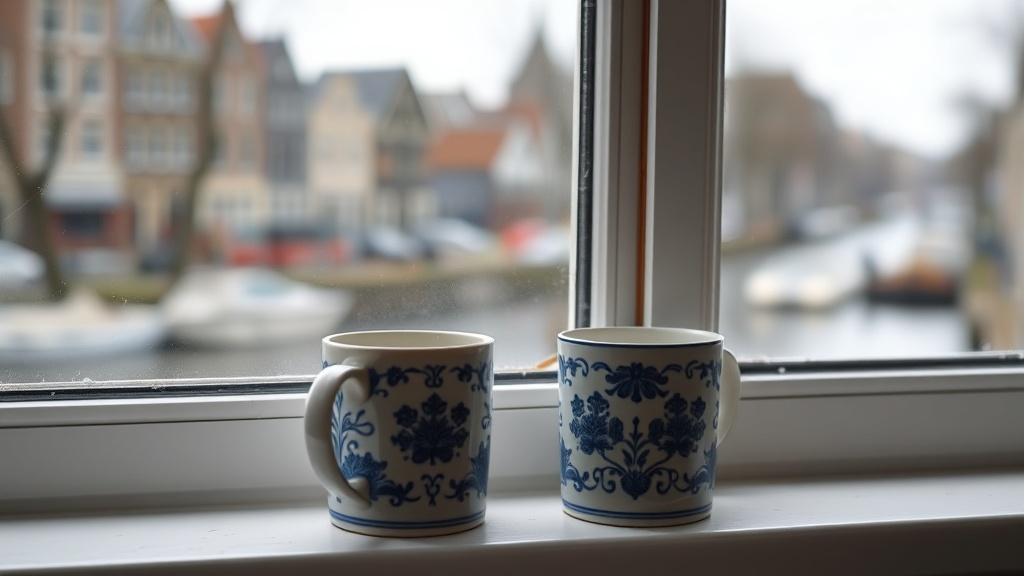
There's no Dutch equivalent of the Japanese tea ceremony. There's no elaborate preparation, no prescribed bowl size, no silence. What there is instead is the theepauze — the tea pause — a break that happens at roughly 10:30 in the morning and again around 3 in the afternoon, in homes, offices, and anywhere else people spend time together. It is not optional. It is not fancy. It is completely non-negotiable.
I grew up with this and didn't think much about it until I'd been living elsewhere for a few years and came back. The pause is a social contract. When someone puts the kettle on, you stop what you're doing. That's it. The tea is usually nothing special — a standard supermarket rooibos or an Assam tea bag — but that's almost beside the point.
What I noticed after I started caring about the tea itself
When I started paying attention to what I was actually brewing, the theepauze became a different kind of ritual. Not ceremonial in the Japanese sense, but deliberate. It was already a fixed pause in the day; I just started using it to brew something worth paying attention to.
The Dutch approach gave me the container. The tea practice gave me something to put in it.
This isn't an original observation — a lot of tea culture writing talks about using everyday moments as anchoring rituals. But it was different experiencing it through a habit I'd had my entire life rather than adopting it as a new thing. I wasn't creating a tea practice; I was upgrading one that already existed.
The koek-en-zopie question
Koek-en-zopie — the Dutch term for warming huts on frozen canals that serve hot drinks and stroopwafels to skaters — is the cultural context that makes Dutch tea feel distinct to me. It's an outdoor tradition, cold weather, warming your hands on a ceramic mug. Tea here is fundamentally about warmth and pause, not about flavor complexity.
I find this an interesting counterpoint to the gong fu approach I've spent more time with lately. Gong fu brewing is about extracting the most from a leaf, about precision and repetition. The Dutch theepauze is about stopping. Both are useful things to know how to do.
My grandmother's teapot
She had a brown ceramic teapot that sat on the counter all day. She'd make a pot in the morning and top it up until it was a dark, almost tannin-dense brew by afternoon. She'd drink it strong with milk, two cups at a time, every few hours. The tea itself was unremarkable — a catering-grade black blend from the discount supermarket. The ritual was not.
I think about that teapot now when I'm setting up my gaiwan and measuring out five grams of Li Shan. Different practices, same impulse. There's a pause coming. Something warm is going to be in your hands. Stop and be there for it.